

Chapter 1 - Apandemia
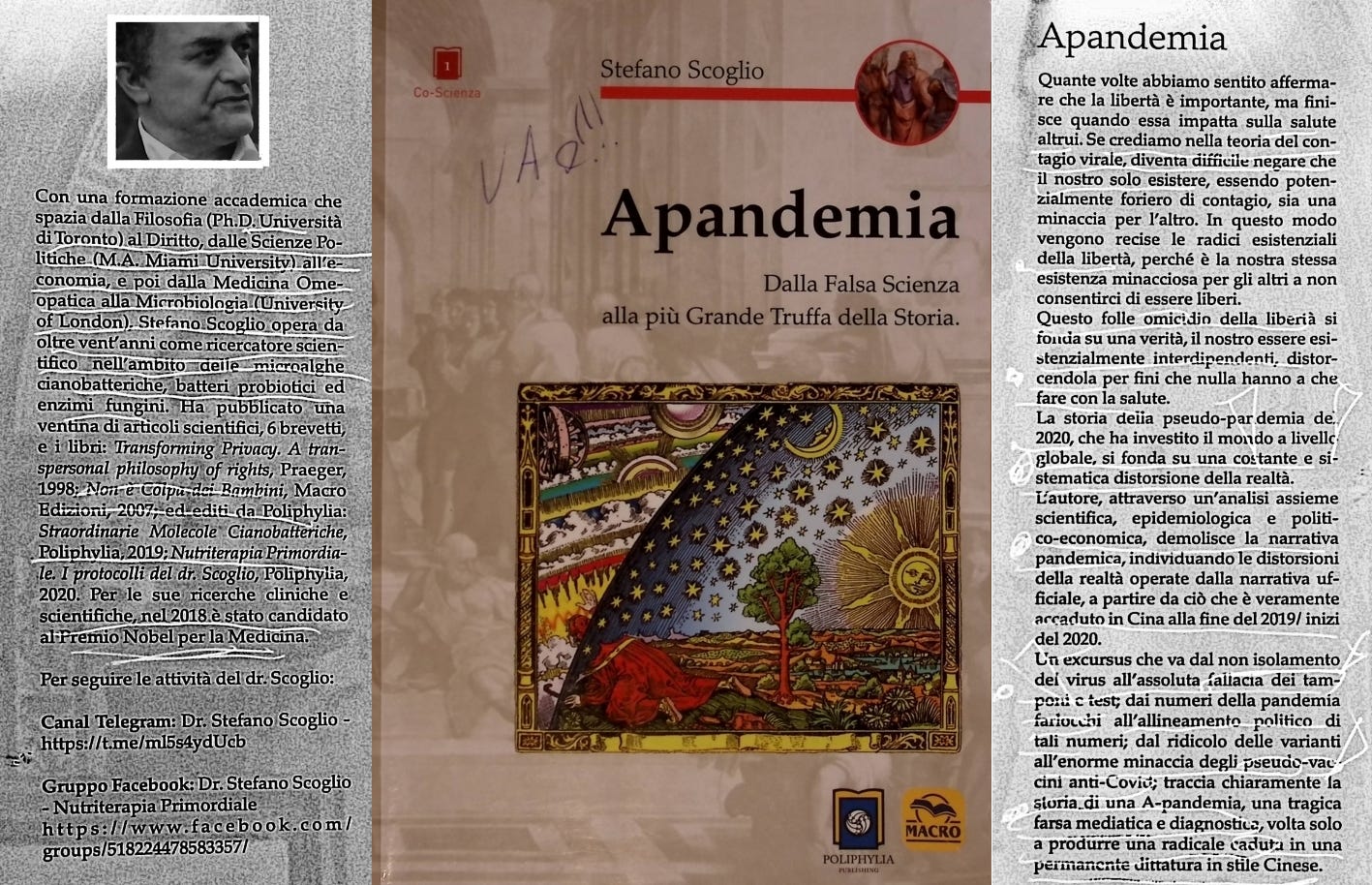
By Stefano Scoglio - translated to English from Italian

What really happened in China. The role of vaccines and 5G.
It all began in December 2019 in China, specifically in Wuhan — the capital of Chinese virology and vaccinology and a primary center of the World Health Organization. This last fact may seem strange, since China might appear to be an “exotic” and “communist” country, and therefore seemingly distant from “Western” and “capitalist” powers such as the WHO. Nothing could be further from the truth: the WHO is fully integrated with the Chinese health system, inheriting a tradition that dates back to the Rockefellers, who established the first Western-style chemotoxic medical university in China as early as the beginning of the 1900s.
The first case, connected to what would later be called Covid-19, occurred on December 1, 2019. It involved a man who showed symptoms of interstitial pneumonia, immediately attributed to a new virus — the one that would be named SARS-CoV-2. At least, that’s how it was reported in the journal The Lancet by a Chinese doctor, who added that the man, elderly and suffering from Alzheimer’s disease, had never been to the Wuhan fish market. 1
In reality, as would mostly be the case later on, the man had an ordinary interstitial pneumonia, which only the interpretation of the dominant narrative turned into a “new” disease — Covid-19. But let’s remember this supposed start date of the pandemic, since it coincides with the enforcement of the Chinese law on mandatory vaccination.
In CCDC Weekly (the Chinese Center for Disease Control and Prevention, modeled after the American CDC), an article appeared on January 21, 2020, stating that the first group of patients with “pneumonia of unknown cause” had appeared starting on December 21, 2019. This is a reconstruction — as we are about to see — that is politically correct.
On December 24, 2019, a group of doctors from Wuhan Central Hospital first collected fluid samples from the lungs of a 65-year-old delivery man who worked at the Wuhan fish market, and then sent them to Vision Medicals in Guangzhou for testing. Vision Medicals reported that it had sequenced most of a virus from the 65-year-old man’s lung fluids and concluded that the virus they had found was extremely similar to the SARS-CoV-1 coronavirus that had circulated between 2002 and 2003.
On December 30, a genetic sequencing report from CapitalBio Medlab in Beijing on the pathogen of a 41-year-old patient from Wuhan confirmed the diagnosis of the pathogen as the SARS-CoV-1 coronavirus. At that point, Li Wenliang and six other doctors spread the news that there was an infection caused by SARS-CoV-1!
Li Wenliang is the doctor who was later praised as a national hero, but at the time, when he and his colleagues shared news of a possible SARS-CoV-1 outbreak, he was arrested along with the other six. This is a key moment for understanding what really happened, as we’ll see.
On January 3, Dr. Li Wenliang was summoned to the Wuhan Public Security Bureau (the Office of Public Security, i.e., the police), where he was forced to sign both an official confession and a letter of reprimand. In the letter, he promised to stop spreading false information and misleading comments in which he had announced the confirmation of seven SARS-CoV-1 cases at the Wuhan Fish Market—an announcement that had “seriously disturbed public order.”
The letter of reprimand stated: “We solemnly warn you: if you continue to be stubborn and impertinent, and persist in your illegal activities, you will be brought to justice—do you understand?” Li signed the confession, writing: “Yes, I understand.”2
Now, let us ask ourselves why there was such a violent repression of the news that the pneumonia cases emerging in China might have been caused by SARS-CoV-1. Considering that only a few days later China openly spoke of SARS-CoV-2 — which virologists say shares about 82% similarity with SARS-CoV-1 — and that, at the time when Li Wenliang shared the news of SARS-CoV-1, there was no reason to believe it was something else, the reaction of the Chinese authorities seems disproportionate and driven by unclear motives.
Let’s take a closer look at the timeline:
• On January 3, Li Wenliang and his colleagues were silenced, despite the fact that two sequencing analyses had already been performed by specialized laboratories confirming a diagnosis of SARS-CoV1.
• On January 5, the Chinese CDC announced an alternative sequencing result, which would be published on January 12, and which was presented as a new coronavirus, different from SARS-CoV1.
• While this alternative official version was being built, news that the infection was caused by SARS-CoV1 spread uncontrollably. The Chinese government outlawed the hashtag #WuhanSARS and threatened arrest and imprisonment for anyone participating in its dissemination. Again, this was a disproportionate reaction, considering that at exactly the same time the Chinese CDC was formulating a genome of the new supposed virus, one reportedly similar to SARS-CoV1. In short, the government feared that the emerging, apparent epidemic might somehow be linked to SARS-CoV1.
• The genome published on January 12 (but already sequenced on January 5) was produced by the same Chinese CDC team that would later publish the key paper claiming the isolation of the virus (which we will analyze in detail in a specific chapter). 3
Now, if we go and look at that article, the authors claim that the bronchoalveolar lavage fluid samples used to sequence the genome of the supposed virus were collected in Wuhan on 21 December 2019. The first strange thing is that the first report that comes out of China about cases of interstitial pneumonia in Wuhan is the one from Li Wenliang’s group on 24 December. Only on the following 12 January do the researchers from the Chinese CDC claim to have worked on samples collected on 21 December. Is that true? Or is it yet another piece constructed by the Chinese authorities to obscure Li Wenliang’s story and give priority to the discovery of a “new” virus over the earlier, public report of an infection caused by SARS-CoV1?
There is more. As will be seen in greater detail in the specific chapter, Zhu et al., the researchers from the Chinese CDC, state that they took three bronchoalveolar samples from patients in Wuhan, and that:
“The new coronavirus was identified in all three patients.”
From this statement it is understood that all three patients had the same virus and that this virus was new, therefore different from SARS-CoV1. However, immediately afterward they add:
“Two nearly complete coronavirus sequences were obtained from bronchoalveolar lavage (BetaCoV/Wuhan/IVDC-HB-04/2020; BetaCoV/Wuhan/IVDC-HB-05/2020|E-PI_ISL_402121), and one complete sequence was obtained from another patient (BetaCoV/Wuhan/IVDC-HB-01/2020|EPI_ISL_402119). The complete genomic sequences of the three new coronaviruses were published on GISAID... and have 89.9% nucleotide sequence identity with a bat SARS-like coronavirus.” 4
Now, the first thing to note is how it could be possible that a prestigious journal like the New England Journal of Medicine accepted to publish an article in which, on the same page, it first speaks of a new virus—thus a single entity—and immediately afterward says that there are three different coronaviruses; and how it could be that this study became the forefather of the entire series of studies on the isolation of SARS-CoV-2, without anyone among those who shouted that yes, the virus had been isolated, plain and simple, noticing this blatant contradiction!
But the most interesting thing to understand what really happened in China is this: if the alleged new virus is actually three different viruses, and if all of them have an enormous (almost 90%) similarity with other SARS-CoV; unless it is a divine entity capable of being at once one and three; and obviously it would have been entirely plausible to interpret it differently, namely that the alleged viruses found in the three patients were nothing more than mutations of SARS-CoV1. To be clear: as we will see, what are referred to as viruses are nothing more than exosomes, beneficial and healthy particles produced by our body and, as we will see, absolutely indistinguishable from viruses. But if we want to stay within the viral narrative, then it is necessary to underline all the internal contradictions within the official narrative.
In fact, even the first laboratory that sequenced the alleged virus on behalf of Li Wenliang’s group, Vision Medicals, had found a huge similarity—though not an identical match—with SARS-CoV1. And, based on the same degree of similarity as the Chinese CDC team, Vision Medical concluded that it was SARS-CoV1; whereas the Chinese CDC, without having any single unified virus—but instead three different sequences similar to other SARS viruses—determined that it was a new, unified virus, which it named 2019-nCoV.
In other words, the decision to declare these new gene sequences as a new virus—later called SARS-CoV2—was a purely political one, initially made for reasons internal to Chinese politics and the government’s need to absolutely avoid any association between the deaths in Wuhan and SARS-CoV1; and later, for international political and financial reasons.
If there were not such economic and political interests sustaining the so-called pandemic, how could one possibly accept that the multitude—over 3,000,000 genetic sequences related to SARS-CoV2—deposited in the virus database GISAID, continue to be considered as a single, unified SARS-CoV2?
But returning to China: what is the reason for the urgency with which the Chinese government—through harsh repression on one hand and the development of a more convenient scientific version on the other—silenced the account of the Wuhan epidemic as SARS-CoV1?
To understand this, we need to take a step back, to the period after 2002–2003, when the world was affected by another so-called pandemic — that of SARS-CoV1. It was a mini “pandemic,” far less harmful, since no one ever thought of shutting down the world; and when, just over a year later, it was declared over, that pseudo-pandemic left no trace or memory behind.
But it did have one consequence: studies on anti-SARS vaccines began. The two countries most involved in SARS vaccine research were the United States and China.

As can be seen from the summary provided by the website mentioned above, “...in 2004 U.S. researchers reportedly successfully used an experimental anti-SARS vaccine on mice; while in 2004, in China... researchers successfully vaccinated people with the SARS vaccine.” They then add that, since it takes 3 to 5 years to develop a vaccine, that human study had laid the groundwork for potentially confronting a future epidemic.
But the experimentation did not stop, until in 2012 a study came out with results that were far from encouraging.

The study, which is American even though the first author has a Chinese name, is titled: “Immunization with SARS coronavirus vaccines leads to pulmonary immunopathology upon exposure to the SARS virus.” The study concludes:
“These SARS vaccines all induced an antibody response and protection against SARS-CoV. However, the mice that were given any of the vaccines and then exposed to the virus developed Th2-type immunopathology, indicating that hypersensitivity to SARS-CoV components had been induced. Caution is therefore advised in proceeding with the application of the SARS-CoV vaccine to humans.”5
Aside from the usual pretense of attributing to a so‑called virus what are actually direct effects of the vaccine, the strong call for caution regarding human experimentation is evident. Thus, the U.S. halted vaccine development and testing. But the possibility of harm to humans is not something that would stop China, which in fact continued its experimentation undeterred.

In November 2012, China began planning human trials of the SARS‑CoV‑1 vaccine on volunteers. The head of the Chinese Food and Drug Administration (FDA) stated that, although there were not yet any data on humans, the vaccine had produced excellent results in monkeys. And so, despite the warnings from the U.S. research group, China decided to proceed with human experimentation.
In reality, up to 2017, “...none of the vaccines developed had been tested in human clinical trials.” 6 However, behind the scenes, experimentation continued, since it had begun in 2013 based on very optimistic expectations and in complete disregard of the cautionary warnings emerging from other studies. On the other hand, human testing of the anti‑SARS‑CoV‑1 vaccine had already begun in 2004, with the completion of Phase 1 drug registration and the promise that the vaccine “...would be available in 1–2 years if another epidemic broke out, or in 4–5 years if no other epidemic occurred.”7
So, to summarize: starting in 2004, China began animal and human trials of the SARS‑CoV‑1 vaccine, equivalent to a Phase 1 clinical trial. In 2012–2013, what could be defined as a Phase 2 human trial began. Typically, Phase 2 and Phase 3 trials take 4–5 years, which means that China likely had an approved and available anti‑SARS vaccine by 2018–2019.
And, coincidentally, in June 2019, China introduced a new national law on universal mandatory vaccination.
“On June 29, 2019, the Standing Committee of the National People’s Congress of the People’s Republic of China (the ‘PRC’) promulgated the PRC Law on the Administration of Vaccines (the ‘Vaccines Administration Law’). The Vaccines Administration Law will come into effect on December 1, 2019.”8
Now, I searched everywhere—I even tried translating part of the Chinese text of the law—but nowhere is it specified which vaccines were included among the mandatory ones (even though it mentions as many as six vaccines). However, given China’s intense commitment to developing the anti‑SARS vaccine, and considering the timeline described above—with SARS vaccine trials starting in 2013 and thus likely concluding around 2018—it’s reasonable to assume that one of the six mandatory vaccines was the new anti‑SARS‑CoV‑1 vaccine. And that’s precisely why China so harshly suppressed any attempt to claim that the first Wuhan cases were linked to SARS‑CoV‑1.
In fact, it is now well known that vaccines often become the primary sources of the very diseases they are meant to fight (as in the case of poliomyelitis)—not because of any infectious process, but because the toxicological damage caused by the vaccine is covered up under the claim of the infectious disease it was supposed to prevent, according to the theory that the inactivated virus in the vaccine can somehow “reactivate.” And in China’s case, the anti‑SARS vaccine was a traditional antigen‑based vaccine, not a genetic mRNA vaccine like those used today.
Just imagine what a blow it would have been for the Chinese government if, right after introducing the anti‑SARS‑CoV‑1 vaccine, a SARS‑CoV‑1 outbreak had broken out! China’s government was already particularly sensitive to public backlash over vaccine‑related harm. In fact, in 2018, China went through its most serious vaccine crisis.
“In July, China experienced its most serious health crisis in years... Vaccines produced by Changsheng Biotechnology were administered to 215,184 Chinese children, and 400,520 substandard vaccines were sold in the provinces of Hebei and Chongqing... As a result, many parents lost all confidence in the vaccination system, which was described on social media and the internet as poisonous.” 9
Perhaps this was also the reason why, a year later, China—having lost public trust—introduced mandatory vaccination, almost certainly starting in Wuhan, the capital of Chinese virology and vaccinology. Imagine what could have happened if, after the 2018 disaster and the imposition of mandatory vaccination, an even greater disaster had been tied to the newly introduced vaccines, almost certainly including the anti‑SARS‑CoV‑1 vaccine. It’s clear that it was essential for the Chinese government to prevent any link between the anti‑SARS‑CoV‑1 vaccine and the return—warned about by the late Li Wenliang—of the SARS‑CoV‑1 disease from over 15 years earlier.
To be clear: I don’t believe any virus was responsible, because vaccines themselves cause deaths and injuries. But if you want people to believe that the deaths were caused by a virus—which the public generally does—then it’s obvious you can’t allow the idea that the responsible virus might actually be the one people were just vaccinated against.
And so, as we’ve seen, the effort began to invent the new virus SARS‑CoV‑2, which is very similar but slightly different from SARS‑CoV‑1—and thus represents a new pathogen requiring a new vaccine (which China immediately began developing and completed in record time, confirming that a SARS‑CoV‑1 vaccine already existed and served as its basis).10
The conclusion is characteristic of a dictatorial regime like China’s: Li Wenliang, after being forced to admit that his claim—that it was SARS‑CoV‑1—was mistaken, was later rehabilitated. For safety’s sake—to ensure he wouldn’t change his mind—he was “conveniently” infected and died soon after, supposedly from SARS‑CoV‑2. Once dead (since his death from SARS‑CoV‑2 was merely a cover for the elimination of an inconvenient figure), he was transformed into a Communist national hero—the first bulwark, at great personal sacrifice, against the new, terrible pseudo‑pandemic.
Surely everyone remembers the Chinese footage showing people suddenly collapsing dead in the middle of the street. Like many others, I initially thought it was a staged scene—an effective cinematic trick—since it became one of the first tools used to spread fear around the world. But lately, I’ve been thinking that perhaps similar episodes could indeed have occurred: if someone receives six vaccines all at once, is of a certain age, and perhaps not in perfect health, it’s possible they could experience anaphylactic shock, or that the general toxic load contained in vaccines might have triggered a sudden heart attack. 11
There’s another factor to consider when talking about what happened in Wuhan: 5G. It should be noted right away that mass vaccinations and 5G are the two elements that Wuhan shares with Bergamo, the second city in the world where the alleged pandemic outbreak occurred (how the virus supposedly jumped miraculously from southern China to northern Italy remains unexplained—and likely never will be).
I’ve always been very suspicious of the new 5G technology—not only for scientific reasons but also based on personal experience. 5G uses high-frequency, ultra-short waves, typically within a range between 24 and 72 GHz. This is the same frequency long used in the body scanners at U.S. airports. Since I often fly to and within the United States, I’ve frequently had to go through 5G body scanners. Today I refuse to pass through them and always choose to be physically searched instead. What led me to make that decision was the following incident.
On the same day, I had two connecting flights, and because time was very tight, I decided to use the body scanner (a pat-down, since it requires waiting for a specific officer, could have caused me to miss my flight). The first scan was a bit uncomfortable but tolerable. However, immediately after passing through the second scanner, I felt utterly overwhelmed—as if my entire body had suddenly been invaded by a swarm of atomic, electronic ants that began eating away at my flesh. It was a horrible sensation, unlike anything I had ever experienced before—one I wouldn’t wish on my worst enemy.
I began taking large amounts of my Klamath microalgae extracts, and within about an hour I was back to normal—but with a firm resolve never to go through a body scanner again!
Surely, since I’m relatively “clean” thanks to my health practices, I’m more sensitive than most people. Yet the fact that others don’t notice what the body scanner does to them doesn’t mean it isn’t harming them.
Dr. Thomas Cowan wrote an interesting book, The Contagion Myth, in which he presents the theory that many alleged pandemics, far from being caused by viral contagion, were instead the result of successive phases of increasing electrification that occurred throughout the 19th and 20th centuries. The most recent of these electro‑electronic revolutions is 5G, and Cowan emphasizes the crucial coincidence between the rollout of 5G and the emergence of COVID‑19. I’ll say right away that I don’t completely agree with Cowan, because I believe the pandemic was wholly fabricated—and, as we’ll see, the data don’t support calling it a pandemic. In other words, my argument is that, for the most part, COVID was merely a new label for the traditional phenomena of pneumonia and influenza, which, not coincidentally, “disappeared” into the COVID category in 2020.
Nevertheless, there’s no doubt that the same regions were also the first to have installations of the new 5G wireless system.
“On September 26, 2019, in Wuhan, China, the 5G wireless system was activated (officially launched on November 1) with a network of about 10,000 5G base stations — more than those existing across the United States — all concentrated in a single city.” 12
That said, it’s true that in certain areas there was a noticeable increase, though temporary and limited to March 2020, in mortality. My thesis, as also seen in relation to the Chinese situation, is that mass vaccination played the key role in this increase in deaths, since the hardest-hit areas coincide with those with the highest volumes of mass vaccination. It is certainly an interesting coincidence that, in the same location where a major health crisis occurred, both mass vaccination mandates and the large-scale rollout of 5G were implemented almost simultaneously. For Cowan, this could explain why, although the condition called COVID‑19 is essentially a respiratory/lung disease, sharing most characteristics with various forms of pneumonia, it also seems to present some new peculiarities:
“A study from Wuhan showed that more than one‑third of coronavirus patients had neurological symptoms, including dizziness, headache, partial loss of consciousness, muscle and skeletal damage, and loss of smell and taste — and more rarely, seizures and stroke. This is not a normal flu; this is a serious illness.”
I must say that this claim doesn’t convince me: all the symptoms mentioned up to the loss of smell and taste have always been typical of certain types of flu accompanied by fever and pneumonia. As for the more severe symptoms such as seizures and strokes, given that COVID‑19 primarily affects people over the age of eighty, it’s very likely that these more serious symptoms were linked to severe pre‑existing conditions or to the introduction through vaccines of potent neurodegenerative agents such as aluminum.
One of the most recurrent themes in the dominant discourse is indeed the loss of smell and taste as an indicator that it’s COVID and not influenza. But the truth is that there exists extensive scientific literature that has always reported loss of smell and taste as typical of certain types of influenza, so even here there’s nothing new. 13
That said, I absolutely agree with Cowan that 5G contributed to the pneumonias of 2020, and that together with vaccines it may explain some localized increases in mortality. As Cowan also reports, high-frequency electromagnetic fields, like 5G, alter the permeability of cell membranes14, and this obviously creates a predisposition to disease. But the worst contribution of 5G relative to respiratory pathologies is “the fact that some 5G transmissions use the frequency around 60 GHz, a frequency that is absorbed by oxygen, causing the breaking of the oxygen molecule (composed of two oxygen atoms), making it unusable for respiration.” 15
Even though the specific 60 GHz frequency is more active in its ability to destroy oxygen molecules, all the high frequencies of 5G intervene unfavorably on cellular oxygenation. A central symptom associated with COVID is prolonged hypoxia, with lack of oxygen and thus difficulty breathing. However, we have also seen something else, namely that this hypoxia is linked to the displacement of iron from hemoglobin, with the result that on one hand hemoglobin does not transport more oxygen generating hypoxia, and on the other hand the iron, unbound from hemoglobin, circulates free in the bloodstream contributing to inflammation and the generation of thrombi in the pulmonary vessels.
We will see how this second aspect proved central in the diagnosis and treatment of COVID, which at the beginning was read as bilateral interstitial pneumonia, but after some centers decided to perform autopsies (discouraged by the government), it was discovered to be mainly, in the most severe forms, pulmonary thromboembolism.
Once researchers made this discovery, some immediately rushed to explain it as a viral effect, frankly grasping at straws. Instead, it’s highly likely that 5G frequencies not only break down oxygen molecules, thus contributing to hypoxia, but also cause iron loss from red blood cells.
To understand this, we need to focus briefly on a study that tested 5G radiation’s ability to alter red blood cell permeability. According to this study, frequencies above 18 GHz (i.e., 5G frequencies) can open cells to the entry of external substances (specifically, silicon nanospheres in this case) and keep red blood cells permeable for about 9 minutes after a 18 GHz pulse. The authors propose this as a possible method to facilitate drug entry into cells. 16
But consider what this means in the opposite direction: if the red blood cell remains permeable, like opening a door that allows entry but also exit. Now imagine being immersed in a network of 5G antennas like those in Wuhan, or living with a group of people all using 5G phones, thus constantly exposed to pulses from 17 GHz to 72 GHz. Your red blood cells would remain constantly open (not just for 9 minutes) in both directions. Remember that 5G pulses also have the nefarious ability to destroy oxygen molecules.
Now add to this the fact that your red blood cells not only fail to transport oxygen well, but with open cell membranes, the iron contained in hemoglobin—which becomes useless without oxygen to transport—starts leaking out of the red blood cell, causing damage in the tissues. This creates precisely the typical preparatory situation for the onset of thromboembolism: less circulating oxygen, more unbound circulating iron that is super-oxidizing, generating inflammation and thereby promoting thrombus accumulation.
It is therefore very possible that 5G, which was already massively present in Wuhan, contributed significantly to doubling that vaccine damage already known to generate a cytokine storm with parallel explosion of inflammation, prerequisites for the development of pneumonias, both bilateral interstitial and, with the advancement of the inflammatory and hypoxic process, in the form of pulmonary thromboembolism.
We conclude this chapter by remembering how the Wuhan health crisis, far from being a viral epidemic, was a crisis linked to the two key events that occurred in November-December 2019: the installation of 10,000 5G antennas and the introduction of mandatory vaccination for 6 vaccines, one of which very probably an anti-SARS-CoV1 vaccine. These two conditions repeated themselves in other key places of the pseudo-pandemic, since Bergamo and Brescia were also subject to mega-mass vaccinations, 185,000 flu shots and 80,000 anti-meningococcus, shortly before the Covid crisis; and they are also one of the areas with the maximum 5G experimentation in Italy.
But before seeing this we must debunk the myth of the existence of a pandemic, demonstrate that the idea that there was a universal contagion is not supported by either the facts or the numbers.


https://en.wikipedia.org/wiki/Timeline_of_the_2019-20_coronavirus_pandemic_from_November_2019-to_January_2020
https://www.bbc.com/news/world-asia-china-51364382
https://web.archive.org/web/20251228131245/https://www.bbc.com/news/world-asia-china-51364382
https://www.ncbi.nim.nih.gov /nuccore/MN908947.1 https://www.ncbi.nlm.nih.gov/nuccore/MN908947.1
Tseng C. et al., Immunization with SARS Coronavirus Vaccines Leads to Pulmonary Im-prim sccen 4 on Challenge with the SARS Virus, PLOS One, April 2012| Volume 7 | Issue e35421.
Liu WJet al, T-cell immunity of SARS-CoV: Implications for vaccine development against MERS-CoV, Antiviral Research 137 (2017) 82e92, p. 89.
https://www.the-scientist.com/news-analysis/china-in-sars-vaccine-trial-50553
https://www.cms-china.info/insight/2019/09_Lifesciences_NL/Newsletter_Life
www.thelancet.com Vol 392 August 4, 2018 https://www.thelancet.com/journals/ lancet/article/P1IS0140-6736(18)31695-7 / fulltext
Coronavirus: How effective are the Chinese vaccines? | Science| In-depth reporting on science and technology | DW | 01.02.2021
https://www.databaseitalia.it/vaccini-antinfluenzali-vaccino-anti-covid-e-terza-e-
ta/?fbclid=IwAR2jFfKAHxwGuZBmNi97aX YGxZCrAE7IZzfKNFzDhhvQQADgsGd-
LEJZDcnQ
Cowan T, Fallon S., The Contagion Myth, Ch. 2, che cita: http://www.xinhuanet.com/
english/2019-10/31 /c_138517734.htm; trad. italiana: II Mito del Contagio, T.R.U. Edizio-
ni, 2021.
Merkonidis C. et al, Characteristics of chemosensory disorders—results from a survey, Eur Arch Otorhinolaryngol, 2015 Jun;272(6):1403-16. In questo studio, emerge che l’influenza é la maggior causa (39,4%) della perdita di olfatto e gusto. Vedi anche: Pellegrino R. et al, Investigation of chemosensitivity during and after an acute cold, Int Forum Allergy Rhinol, 2017 Feb;7(2):185-191.
THP Nguyen et al, “The effect of a high frequency electromagnetic field in the microwave range on red blood cells,” Scientific Reports 7, Article number: 10798 (2017).
Shigeaki (Shey) Hakusui, “Wireless at 60 GHz Has Unique Oxygen Absorption Pro- perties” Scientists for Wired Technologies, https:/ /scientists4wiredtech.com/wire- less-at-60-ghz-hasunique-oxygen-absorption-properties/.
THP Nguyen et al, “The effect of a high frequency electromagnetic field in the microwave range on red blood cells,” Scientific Reports 7, Article number: 10798 (2017)
''We must debunk the myth of the existence of a pandemic, demonstrate that the idea that there was a universal contagion is not supported by either the facts or the numbers.''
Thanks for sharing Renee. It's tragic more people that speak about such things are not invigorated to show what was actually harming and killing people en mass given the official evidence base.
''Now confirmed from both Scottish and UK inquiries is those that died the most arguably ‘involving COVID-19’ with dementia in care homes (eg-often without being tested for COVID-19 March-May 2020) were unarguably harmed the most from the brutal inhumane lockdown restrictions and associated ‘healthcare’ policies where life sustaining support was removed.''
https://biologyphenom.substack.com/p/exclusiveuk-covid-19-inquiry-module-0d6?utm_source=publication-search
That's a lot to take in Renee. No doubt there was a lot of skulduggery.
Leslie