

Sporulation and Biofilms: A Terrain Theory Perspective

Sporulation and Biofilms
Microbiome attacks are layered and incredibly hard to defeat—not just because pathogens are sneaky, but because we often don’t want to admit how deeply our internal terrain has become compromised. This dung didn’t pile up overnight. A healthy microbiome isn’t about endlessly hunting “bad bugs”; it’s about cultivating a strong internal environment where imbalance can’t take root in the first place.
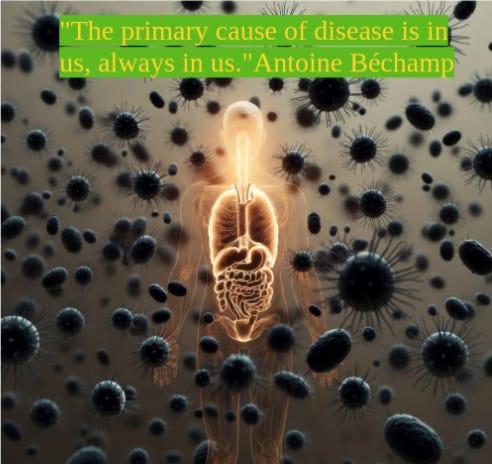
There’s a raging online battle: terrain theory vs. germ theory. Germ theory claims germs invade and cause disease, so we must kill them. Terrain theory—rooted in Antoine Béchamp’s work and echoed in modern microbiome science—says the opposite: the terrain (your body’s internal environment, pH balance, nutrient status, detoxification pathways, stress levels, and microbiome ecosystem) determines whether microbes become pathogenic at all. In a strong, balanced terrain, even “bad” bacteria or fungi remain commensal or beneficial. In a weakened, acidic, inflamed, or dysbiotic terrain, those same organisms turn opportunistic, form protective structures like spores and biofilms, and drive recurring symptoms.
Fix the terrain, and the body handles the rest.
I find the debate confusing because people get lost in vague details or fixate on killing germs while ignoring the host. What really matters is the terrain. Fix the terrain, and the body often does the heavy lifting from there.
You can run endless tests and uncover “problems” (pathogenic bacteria, fungal overgrowth, etc.), but symptoms are often a more useful metric for tracking progress over time. The system, however, pushes more testing and less conversation—because symptoms force us to talk about lifestyle, diet, stress, and the bigger picture of terrain health. The system also prefers testing because it benefits investors and “cures.”
We all harbor potentially pathogenic bacteria and fungi, healthy or not. Finding them isn’t the same as finding “the problem.” You can carry “bad” bacteria and remain perfectly healthy if your terrain supports balance. Theoretically, those same “bad” organisms might even be protective or symbiotic under the right conditions.
But when the terrain deteriorates—through poor diet, chronic stress, antibiotics, toxins, inflammation, or dysbiosis—opportunists thrive. That’s where sporulation and biofilms become major issues. They aren’t random attacks; they’re survival strategies microbes use when the host environment turns hostile.
Sporulation: Dormancy as a Weapon
Sporulation is the process by which certain bacteria form highly resistant spores, allowing pathogens to hide and persist within a compromised host. In a healthy terrain, the immune system and balanced microbiome keep these in check. In a weakened terrain, spores resist detection and treatment far better.
Spore-forming bacteria such as Clostridioides difficile, Bacillus anthracis, and Clostridium perfringens can enter a dormant state that resists heat, desiccation, UV, and many antibiotics.
Antibiotics target active vegetative cells, not dormant spores.
Spores survive extreme conditions on surfaces and inside the body.
After antibiotics wipe out vegetative cells, surviving spores germinate back into active pathogens—💣boom, recurring infection.
This isn’t germ theory’s “invader wins”; it’s terrain theory in action: a damaged terrain allows dormancy and resurgence.
“Sporulation” in Fungi: Candida’s Survival Tricks
Candida species (especially C. albicans and C. dubliniensis) form spore‑like chlamydospores under stress (nutrient deprivation, low oxygen, etc.). These thick-walled dormant structures lower metabolism for survival in harsh microenvironments. While not true bacterial spores, they serve a similar persistence function.
Candida’s adaptive strategies include:
Morphological switching: the yeast–pseudohyphae transition enables tissue penetration, immune evasion, and adaptation to terrain changes. When a macrophage engulfs a chlamydospore, the spore can germinate a tube that pierces and kills the immune cell from within.
Immune masking: Candida can hide cell-wall markers such as beta‑glucans from immune detection.
From a terrain theory standpoint, Candida overgrowth isn’t primarily an “infection” to eradicate—it’s a symptom of dysbiotic terrain (for example, after antibiotics, high sugar intake, or chronic inflammation). A healthy terrain keeps Candida in a commensal role.
Candida overgrowth is less a villain and more a mirror of a struggling terrain.
“Trojan Horse” Partnerships: Why Testing Often Misses It
This connects to endosymbiosis—one organism living inside another. Research shows Candida can act as a “Trojan horse” for bacteria such as Helicobacter pylori.
In this model, Candida cells (particularly chlamydospores and yeast forms) can harbor bacteria inside internal vacuoles:
Physical shielding: the chitin‑rich fungal wall protects internalized bacteria from stomach acid and immune attack.
Antibiotic protection: many antibiotics cannot effectively penetrate the fungal wall, allowing bacteria to survive treatment.
H. pylori benefits from this partnership by using the fungal interior for:
pH buffering: the environment inside Candida is more stable amid stomach acidity.
Transmission and adhesion: Candida’s ability to stick to mucous membranes helps H. pylori anchor and spread person‑to‑person.
This kind of microbial partnership helps explain why standard H. pylori testing (breath or stool) may miss sequestered bacteria and why infections can reappear after “successful” treatment.
Co‑Infection, Persistence, and the Terrain
This dual survival system makes eradication difficult:
Standard H. pylori tests may miss hidden bacteria.
Antibiotics clear free‑floating pathogens, but Candida can release its bacterial cargo after treatment—💣boom💣, reinfection.
Again, terrain theory shines here: killing germs repeatedly fails if the underlying dysbiosis and poor terrain persist. Restore the terrain—rebalance the gut, reduce inflammation, support detoxification, and optimize pH and nutrition—and these hiding strategies lose their advantage.
If you don’t change the terrain, you just keep mowing the weeds.
Bottom Line: Empower the Host
Sporulation, biofilms, and hidden pathogens aren’t proof that germs are invincible invaders. They’re evidence that we’ve allowed the terrain to degrade so badly that microbes must adapt to survive in it.
The focus should shift from endless germ‑hunting to rebuilding a resilient, balanced internal environment through nutrition, stress management, detoxification, sleep, movement, and microbiome support.
Terrain theory isn’t a denial of germs—it’s the empowerment of the host.
Such a helpful piece. Regardless of the evidence supporting terrain theory it’s become my preferred way of understanding illness. Taking responsibility to heal and improve your health is very empowering as opposed to blaming it on other people or something else you have no control over.