

Simplifying My Blog Community
and why I don't focus my blog around the "vaccine"

Pro-Vaccine Narratives Need the Anti-Vax “Other” More Than Most People Realize
I don’t spend much energy talking about vaccines — and here’s why. First, I suspect that a lot of what’s being injected isn’t actually what people think. There’s probably a significant amount of saline in circulation. This helps the pro-vaccine side label people who won’t stop questioning the vaccines as “crazy.” I’m not saying it’s all saline — just that there’s a lot of saline, okay?

For me, it’s more effective to point out that we never needed a vaccine in the first place. That logic applies to far more than just COVID.
Here are a couple of COVID-specific examples showing that we never needed a vaccine. Each image includes testimony provided by BiologyPhenom’s blog.


Spending more time being explicitly “anti-vax” might make my blog more popular, but I don’t believe it would stop vaccines or change the underlying dynamics. That’s why I don’t invest much energy there.
The pro-vaccine side structurally depends on anti-vax noise more than it admits.
Having the “anti-vax” villain fuels outrage, fundraising, and perpetual “public health crisis” narratives. It creates an easy villain to mobilize against — one that conveniently justifies censorship, demonetization, and platform-level risk profiling.
Spring Cleaning Update
In a previous post1, I explained how bot farms often rely on cell phones, since mobile devices effectively disguise bot activity. Bots can like posts, share them, or leave comments — but that’s not all. They can also sabotage accounts and enforce shadow bans.
On platforms like X and Facebook, bot farms are routinely deployed to mass-report accounts for “misinformation,” spam, or harassment.
On Substack, the tactics are subtler but just as effective. Bots can subscribe to a blog but then never open emails, read posts, or engage with Notes. These bot-like subscriptions create the illusion of growth while polluting analytics.
Third parties can even buy fake subscribers for a rival (occasionally for me — aw shucks) to inflate numbers artificially, distort metrics, or test abuse mechanisms.
I’ve also noticed something strange about Substack Notes: the platform seems to punish creators for posting internally. With other platforms like X or Facebook, the punishment would be for sending traffic off-platform— like if I try to share a Youtube link on Facebook or X. I can share endless links to my blog; followers might like those Notes, but they rarely click through to read the full post. That’s understandable, because people are hooked on scrolling — but still odd.
This dynamic reinforces how accounts can be quietly shadow-banned on Substack. It’s one reason I’ve begun removing low-engagement subscribers. I can’t afford to keep inactive accounts that dilute reach and engagement. I’m here for readers who truly want to be here. If you appreciate my work, I appreciate you just as deeply — but the current environment demands pruning to keep the signal clear.
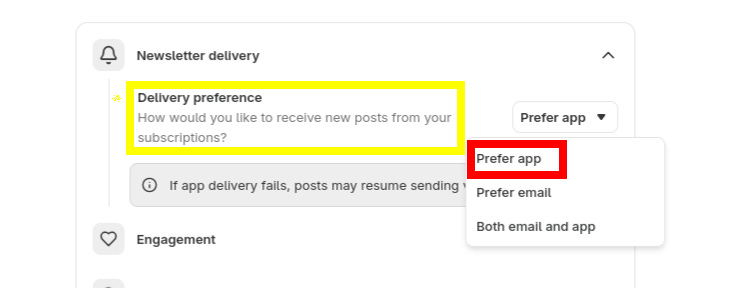
If you’re trying to understand what engagement means, it can be as simple as opening an email. But if you prefer not to open the emails I send, you can turn off email notifications and instead set a reminder to check my blog at farsideoffringe.ca regularly for new posts. Even just opening and viewing a post helps support me.

I want to keep reading your blog, Renee.
Leslie