

How to Write a NYT Bestseller
It only takes one sentence sometimes.

In this post, I compare four books I’ve read recently — all of them praised and commercially successful. Two earned a spot on the NYT bestsellers list, while the other two remained hidden from the spotlight, despite their quality.

1. Fall of Giants by Ken Follett (2010)
This epic novel was a runaway success, topping bestseller lists worldwide. For me, it was enlightening mostly because it offered historical context on the birth of the Soviet Union and World War I.
But early on, on page five, I noticed something interesting: “...and the other three had died, one from measles, one from whooping cough, and one from diphtheria.” That small detail struck me as a subtle nod to virology — perhaps even a narrative reminder of the pre-vaccine era and its dangers. Fiction, yes, but pointed all the same.
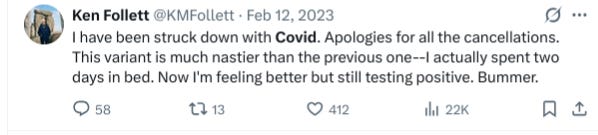
Curious, I looked up Follett online. On X, he’s tweeted a few times about COVID, including one message where he apologized for canceling events after being “struck down with Covid.” He mused that this variant was “much nastier than the previous one.” Too bad the vaccine didn’t protect him, I thought — but at least he’s got his NYT bestsellers.
2. Breath by James Nestor (2020)
Released at the height of the COVID era, Breath became an international hit, landing squarely on the New York Times bestseller list. I don’t own a copy, but I recall a short sentence that lightly touched on immunization: “Being healthy is not just about immunizations…”
That line stood out to me. It felt like an obligatory nod — a small, strategic inclusion to signal compliance. Still, the book had value; I learned a great deal about breathing techniques and respiratory health. Unlike Follett, Nestor didn’t post about COVID on X, which suggests that the line might have been added for bootlicking, not conviction. In mainstream publishing, hinting at vaccine skepticism can be career suicide — unless your book avoids saying anything truly useful. Perhaps that paradox is worth exploring another time.
3. Gut and Psychology Syndrome by Natasha Campbell-McBride, M.D. (2004)
Though described by publishers as a bestseller and widely circulated, this book never made the NYT list. I see it as a hidden gem — one that challenges accepted medical narratives. I only discovered it through a YouTuber named Marisa, who introduced me to the GAPS diet, also known as the Specific Carbohydrate Diet (SCD).
It’s surprising how many health professionals, even naturopaths, haven’t heard of it. Perhaps they’re simply overextended, or perhaps the book’s content made it easy to ignore. Campbell-McBride openly questions vaccine safety in Part 1 Chapter 8 and disputes the idea that autism is purely genetic. In Part 3 Chapter 5 she writes:
“We pollute the water we drink, the food we eat, the air we breathe with industrial and nuclear wastes, and when we get ill, we blame it all on genetics...”
That’s a powerful line — and one reason, I suspect, her work was kept off official lists.
4. Breaking the Vicious Cycle by Elaine Gottschall (1994)
This earlier book, foundational to Campbell-McBride’s, is also labeled a bestseller but never made the official rankings. It’s short, mostly recipes and dietary notes, but what stands out is a letter printed in Chapter 8 from a parent of a recovered autistic child:
“One British researcher found a link between the MMR shot, intestinal problems, and autism.”
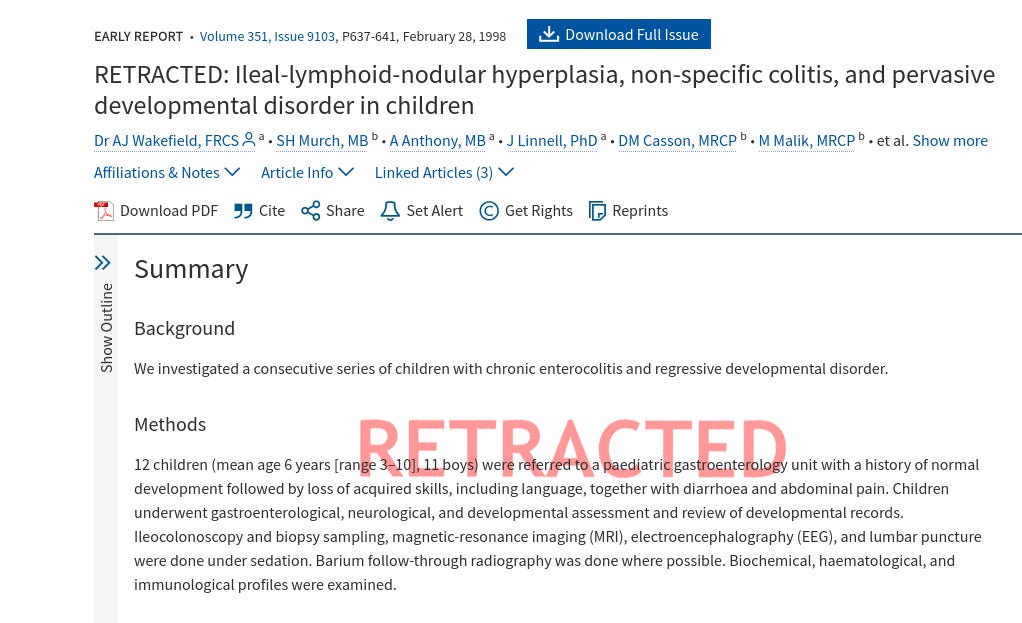
Later on in the text, a footnote points to Andrew Wakefield’s infamous 1998—now retracted—“anti-vaxxer” paper. Even a single reference like that, I believe, is enough to disqualify a book from mainstream recognition no matter its sales.
Final Thoughts
The pattern is unmistakable. As I’ve written before in Authoritarian Control: Anti-Intelligence, there seems to be an unspoken rule: if you question certain medical narratives — even slightly — your work becomes invisible, no matter how many people read it.
Some authors, knowingly or not, craft their writing to stay inside the lines and claim official bestseller status. Others refuse to bow to the “cult of the magic potions.” Between those two paths lies the real divide — not between good and bad writing, but between playing along and standing apart.
Rocks and pebbles dropped into the propaganda pond, which produce a ripple, threading through our consciousness (or subconsciousness).
Rocks and pebbles dropped into the propaganda pond, which produce a ripple, threading through our consciousness (or subconsciousness).